Showing posts with label James Michael Parry. Show all posts

Friday, 23 April 2010

Live Music:Renegades (of Feeder) at The Electric Ballroom, Camden 22/04/10

Old bands 'going back to their roots' is nothing new, but when Feeder completely regenerated as Renegades, something changed significantly. Gone were the slow and thoughtful songs of old which dwelled on the untimely death of original drummer Jon Lee and in their place fans found the energy and simplicity of a fresh new band, as if the group had been transported back to their formation in 1992.

In the transition drummer Mark Richardson was replaced with Karl Brazil, from the relatively unknown band Ben's Brother, who encapsulates the bands new-found new energy with furious and relentless drumbeats.

Front-man Grant Nicholas, who you imagine came up with the 'back to basics' concept, continues to impress on stage at The Electric Ballroom, a venue far smaller than the likes of the Hammersmith Apollo which they played on the Silent Cry tour only a few years ago.

Nicholas admitted he had a soft spot for the Ballroom, saying: “I love this venue. We haven't played here for about 12 years, but even now I remember the great atmosphere it always has.”

Posters on the front doors warn Feeder fans expecting the likes of 'Buck Rogers' and 'Just A Day' that the band will be playing 'predominantly new material', and sure enough they don't disappoint, the most recent, and debatably well-known, of the tracks played is 2006's 'Lost and Found'.

“We know you all want to hear the hits”, Nicholas cries across a crowd spanning decades, “but this is really about the new material and moving forward.”

Luckily the new material delivers the sort of quality we've come to expect from Feeder over the years, albeit a bit more gritty, new band anthem 'Renegades' has even the most lost-looking fans singing along and 'Home' and 'Down By The River', a nod to the bands native Wales, stand up well on stage.

Free with the gig comes Renegades EP2, complete with four tracks: 'Home', 'Goodhead', 'In Times Of Crisis' and 'All I Ever Wanted', making a perfect souvenir for fans who are now left salivating expectantly for the bands new(/debut?) album.

For those feeling out-of-step with the Renegades there were a few 'covers' of Feeder tunes including 'Tangerine', 'Godzilla', 'Sweet 16' and grungy set-closer 'Descend'.

While many may have been disappointed with the lack of hits - the crowd broke into 'Just A Day''s infectious main riff more than once - the band is doing what it wants to do, from the plain but bold style of the merchandise to downsizing to smaller venues, and it feels a lot more personal and as though they are more connected with their fans than ever before.

Verdict: Possibly too much for the Feeder pop fans, but for those longing for some dynamic and striking music from fantastic musicians the night was nothing short of amazing.


Rating: 5/5

Thursday, 1 April 2010

Gaming: The Rise of Online Gaming


It's no secret that the internet, as well as consuming many people's lives, has revolutionised the way we play games together thanks to online multiplayer.

It all began back in 1973 with a little game called Maze War (well, it did if the internet is to be believed, check out the evidence) created by interns at NASA, which allowed players on local networked computers to chase each other around a virtual maze trying to kill each other. Today it's an idea we might call a first-person shooter, making Maze War the creator of an entire genre.

Since then the game has been ported numerous times and is the reason why no one can copyright a multi-user 3D cyberspace, a principle which all modern online games use. The technology has moved on tremendously since then, of course, with simple ethernet computer linking to a worldwide web of computers all communicating across thousands of miles in an instant.

During the 1980s the home computer was born in the UK in the form of the Sinclair ZX80 (and later the ZX81 and Spectrum), making computer games more popular than ever and accessible to the masses.

It was 10 years before another major game brought us closer to online gaming as we know it today. In 1983 SGI Dogfight, a flight simulator, was created for Silicon Graphics workstation computers and networking was added the following year, allowing multiple stations to play over ethernet just as later versions of Maze War had done, but in 1986 support was added for UDP (User Datagram Protocol), which allowed the game to use the internet protocol suite.

However, since the data was sent in broadcast packets, it could not be played across the internet (which itself was in its infancy at the time). It wasn't until 1989, when IP multicast capabilities were available, that it was possible for the game to be played online in the way we know it today, though due to hardware constraints the capability was seldom used.

Meanwhile, other companies were trying to get their head around this new technology, which led to the use of the X Window System, which meant a game could be 'hosted' on one computer and the screen transmitted through X Window, to the other players playing the game.

Xtrek, the first remote display game based vaguely in the Star Trek universe, and later Netrek (or Xtrek II) used this technology and the latter even combined the use of UDP and TCP (Transmission Control Protocol – a system still used today) to allow users to play online on servers.


Since then online gaming has become the norm, rendering the split-screen multiplayer classics of the late 1990s, such as Rare's Goldeneye, almost obsolete, though it has taken some time for consoles to get internet gaming just right. While they were trying to find their feet, games such as Total Annihilation, Counter-Strike and Command & Conquer: Red Alert were being played at LAN (Local Area Network) 'parties' in wire-infested living rooms across the country.

But do we really miss the days of split-screen being cutting-edge? Mark Fletcher, an English Student at Leicester University, said: “Definitely. Nothing like cheering on Perfect Dark 64 by looking at your friend's section of the screen!”

Online gaming's dominance has also caused developers to put a greater emphasis on cooperative play, which isn't well-received by everyone. Graduate Andrew Baker said: “As much as I enjoy online multiplayer I do still want a little one on one split-screen every now and then. it anoys me how a lot of things these days are co-op! What if I want to shoot my friend rather than work with him!?”

So, times have changed as they often do, but the next time you load up a game like Battlefield: Bad Company II to get virtually slaughtered for the 10,000th time, remember it's because of games like Maze War that you have to do it alone in a dark room rather than in a room surrounded by people who laugh evilly when you accidentally blow yourself up.

Sunday, 14 March 2010

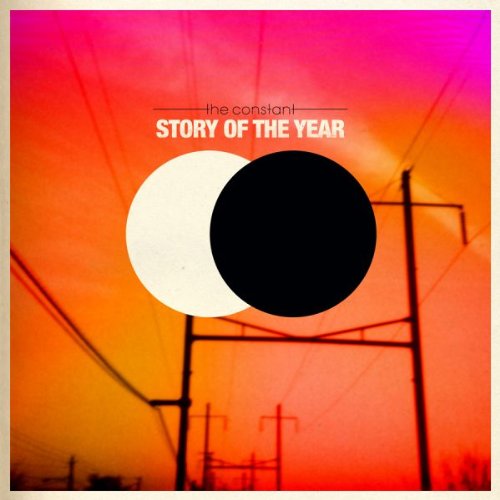
Music Review: Story of the Year - The Constant

The American Idiot's and Viva La Vada's of this world are hard to ignore, but anyone can like them and it not be anything unusual. What is truly great about music is when you find that album you didn't know was coming out, even if you spend time now and again picking apart the unreleased album page on Wikipedia (which tend to be a pretty reliable source of release info by-the-by), you can often suddenly notice an album which has been released completely under your radar.

These hidden gems are what make music great, and my latest discovery was Story of the Years new release 'The Constant'. While I was eagerly anticipating Alkaline Trio's new release (This Addiction, which sadly falls well short of the greatness they achieved on From Here to Infirmary), I came across this furious mix of melody and energy.

The album opens with the slightly grating sound of an old children's roundabout, with the sound of children playing in the background before the children themselves begin the intro with chilling choral vocal “Don't take this world away from me” before the main riff kicks in.

As well as 'The Children Sing' other stand-out tracks include the distinctly Lostprophets-ish 'The Dream is Over', which boasts an impressive guitar solo section, and the anthemic 'I'm Alive', a dedication to a disaffected youth which remains ever-present but never over-bearing throughout the album.

Despite being a very 'punk rock' record, the band calm down for a few tracks in the middle, notably the strangely harmonic 'Holding on to You', giving some welcome variety, something quite uncommon on this type of album. In stark contrast to that is the angry 'Won Threw Ate', which shows off the screamier side of the bands range, but is just restrained enough to mean it doesn't stray too far from the general sound of 'The Constant' as a whole.

Story of The Year, who have been around since 1995, are never a band who will take the UK charts by storm, and nor should they, but they have pulled the experience of their previous three albums into making this latest effort, and it really pays off. The songs are more ambitious musically, but not unnecessarily complex, and the album holds together incredibly well, particularly important with a name like 'The Constant'.

While you may dismiss them as another one of the 'shouty american rock' crowd, that would be a mistake, since this album shows a respectable range and draws on various influences to create songs which at times are alike to Rise Against, Nickelback and even Simple Plan, which is no bad thing.

Verdict: Undeniably catchy and well thought out, an essential addition to any modern alternative music collection.

Rating: 5/5


James Michael Parry

Saturday, 6 March 2010

Cyberculture: The truth about Computer Viruses

Fear is a powerful force. It can lead countries to war, cause panic-buying in supermarkets or lead you to totally change your life to avoid nasty consequences. The British press is by no means the biggest culprit of fear-mongering, but you only need to think about swine flu to realise how a fuss can be made over nothing.

In the last ten to fifteen years computer technology has been revolutionised, and given rise to a worldwide horror: the computer virus. You may have never had a run-in with a virus, your computer may be wrought with spyware at this very moment, but everyone has a fear that some malicious software is going to come along and delete their hard drive.

Of course, we have built up defences over the years, and people spend hundreds on the latest Norton Protection every year, but how serious really is the danger?

A 'virus' by definition is an infectious agent which spreads (like wildfire they say) until it runs into resistance and is killed. In computer terms there are some well-know types of virus, such as the Trojan Horse, the Worm and Logic Bombs.

Trojan Horses (or Trojans) don't reproduce by infecting other files, but normally hide within downloaded files from services like Bittorrent etc, and while Worms (more common in Hollywood blockbusters like Swordfish than the real world) replecate themselves fiercely they are vulnerable to anti-virus software. Logic bombs destroy data on the computer and are hidden within segments of other problems and lie dormant until activated rather than reproducing themselves.

Other malicious software (referred to as malware) includes things like spyware and adware is not truly a virus, since it does not behave in the same way, but can still have a negative effect on your computer.

The most important thing to remember is that the likelihood of the average internet user running into a virus capable of causing critical damage to their computer is extremely rare. Despite the media coverage last year of the number of computer viruses in circulation topping 1million (TimesOnline), users have never been more protected.

Any recent operating system has its own anti-virus defence in place, before you even look into the plethora of different programs claiming to over you 100% protection, ranging in price from free to over £100 for just a year's coverage.

The types of virus regular PC users may come across (from personal experience) are as follows:

Account 'Hacking' – You know the story, you're chatting away to your friends and loved ones on MSN or Yahoo Messenger and suddenly it signs you out. With an eyebrow raised, you log in again, only to be confronted with angry messages from people saying “What was that link you sent me?! What have you done???” Either your account really has been hacked by a geek tucked away somewhere in the world, or you've given out your email address somewhere and without realising given them access to your messenger, allowing an automated program to spread the infection to all of your contacts.

Cure: Sometimes they can be caused by dodgy plug-ins to your messenger, so get rid of them, if changing your password doesn't help then you'll have to make a new account – sorry!

Pop-ups – Not true viruses, but pop-ups are definitely annoying, these days advertising agencies have realised that with certain browsers (particularly Firefox 3 with Adblock Plus), pop-ups and banner ads can be blocked out entirely, meaning users can go about the

ir daily business without being tempted by a “Free IQTest” or “Win £36,746 NOW! New Winners Every Hour”.

Cure: Free software 'Ad-awarte' by Lavasoft is a highly recommended and effective way of getting rid of spyware, the tiny programs which cause pop-ups when you aren't even using your browser, providing you are connected to the internet, sometimes general virus-checkers can miss this smaller programs since they don't do anything nasty to the computer.

Hoax Emails – Occasionally you may get an email saying “Warning Your Computer is infected with a Virus, click HERE for a free Virus check” or from a company you know and trust asking you to verify your details. If you give out your details you could land in real trouble.

Cure: First of all, you cannot get a virus and destroy your computer by simply opening an email, it can't happen, no matter how many times you open it. It can send it on to all your contacts however, so still be careful. For hoax emails all you need to do is not give out your information, respectable companies never ask for personal details via email, and be sensible, why would you get an email saying you not only have a virus, but a 'free' way of getting rid of it.


The internet can be a dangerous place if you're careless, but in truth there aren't horrible people lurking behind every corner, people are genuinely nice and genuine, just like you and me, so try to see through the bad press, be sensible and you shouldn't have any problems.

For more information on the myths surrounding computer viruses check out this report by Triumvirate from way back in 2000, just after the biggest hoax of all – The Millennium Bug. You can also check out the relevant Wikipedia article and a useful virus dictionary from Jayashree Pakhare

Oh and NEVER, EVER pay for Norton...you can get AVG for free and it's better, faster and more effective.

Happy browsing, check out this video from Weird Al Yankovic which sums up just how crazy the virus fear is.


James Michael Parry

Tuesday, 9 February 2010

Film: Review - The Wolfman

As mythical creatures go, we seem to have been overwhelmed in the last few years: centaurs and unicorns from the Narnia and Potter-verses, goblins and beasts to give children nightmares in The Spiderwick Chronicles and The Dark Is Rising and angst-ridden teenage vampires in The Twilight Saga.

With all these children's' films around you might be fooled into thinking these creatures of the night aren't scary; The Wolfman changes all that.

From the opening giving a chilling recitation of the werewolf legend, the film embraces the clichés and preconceptions of Gothic horror to set its scene. Foggy moorland – check, continuously murky and rainy weather – check, an isolated village overlooked by a looming manor house surrounded by forest – check. What could go wrong?

Amongst the trees a lone man treks through the fogged woods, with only a lantern for protection you can guess how well he gets on. It turns out the man is Ben Talbot, brother of Lawrence Talbot, played by a timid Benico Del Toro, who soon arrives straight from the stages of London to clear up the fowl business.

With such a deadly creature for a title, you'd expect a certain amount of violence, but Director Joe Johnson pushes to gore levels approaching that of a slasher-horror. Thankfully, much of the mutilation is off-screen, the audience only given split-second glimpses of the wolfman until the second act.

The CGI, which grants Del Toro the more animal side of his on-screen persona, is both terrifyingly realistic and surprisingly well used, particularly when highlighting Lawrence's splintering mind and his struggle with the beast within reaches it's most severe. One chilling moment sees the statue which lies above Talbot's mother's coffin slowly turn her head , complete with fatal neck injury, saying “Look in to my eyes Lawrence, you'll see I'm quite dead”.

Anthony Hopkins, as Lawrence's father Sir John, is on fine form and provides the most disturbing performance of the film, while Emily Blunt fits seamlessly into the period as leading lady Gwen Conliffe. Despite the usual necessity for romance, the film only hints at the tortured love that develops between Lawrence and Gwen, the reality of the situation keeping them apart.

Hugo Weaving is the real star of the show though as the suspicious Scotland Yard man Francis Abberline, who, like the audience, quickly sees the fantastic truth of the whole situation. The growling voice of The Matrix's Agent Smith and the calm wisdom of The Lord of The Rings' Elrond combine with a hint of cynicism and comedy from V for Vendetta's V to create a formidable pursuer for Del Toro.

There are some well thought-out set pieces and the flash-back moments are used for more than just the sake of it, but the pace quickens unevenly, making it difficult to continue to suspend disbelief, it almost seems as if a werewolf has been thrown in to an otherwise quiet period drama.

Since it is a remake, and one determined to stick to the original story, there are always drawbacks, and the most telling one of all is that you probably already know what happens before the Orange Wednesdays Advert has finished.

As a result the story leads to an inevitable conclusion, dissolving the tension and suspense built up the whole way through and falling into the trap of over-the-top action and gore in an attempt to build a climax.


James Michael Parry

Wednesday, 27 January 2010

Gaming: Mass Effect - The essential catch-up guide

For those of you out there who are of the Xbox 360 persuasion, you may have heard about a little sequel called Mass Effect 2 – due to hit stores in Europe on Friday 29.

“But I've never heard of 'Mass Effect'?!?” I hear you cry. Well, I hope to try and explain what it's all about to those of you who are new to the Xbox family, or just those who the first game passed by, clued up on this tremendous and potentially genre defining sci-fi franchise.

So, what on Earth is 'Mass Effect'?

Mass Effect is an Xbox 360 game released in 2007 (though it also got a PC release in 2008). The game sees you control Commander Shepard, a soldier in the Alliance, through the tense narrative of a space opera, which sees you uncover the truth behind an ancient evil threatening the galaxy and defeat it. Imagine playing your way through a mixture of Aliens, Star Wars and The Wrath of Kahn and you're half-way there.

Why's it called 'Mass Effect' then?

'Mass relays' are technology supposedly left behind by an ancient race which became extinct over 50,000 years ago called the Protheans. The relays allow spacecraft to travel across the galaxy over great distances in a short space of time, in a similar way that Warp and Hyperdrive work in Star Trek and Star Wars. The Citidel is the hub of the relay network, and since the technology was discovered the galaxy has been connected through it, allowing countless races to come together to meet, trade and share their own technologies and knowledge.

So you control this guy?

When you first start a new game you must create your character. Like many RPGs (role-playing game), you are offered the choice of a male or female character and an array of different classes which affect how you play the game. The in-game universe contains three main skill-sets – Combat, Biotics and Tech - which each class has varying degrees of. Combat is the skills of a traditional soldier, if you fancy the 'all guns blazing' approach then this is the skill-set to focus on. Biotics are a strange psychic-like force which allows you to levitate enemies in the air, throw them or otherwise immobilise them, meaning fans of spell-casting classes in other games will feel most at home here. Tech is, as the name suggests, focused on technology and levelling the battlefield in more of a supporting role than an out-and-out fight, making the players who use this ability more team-focused in combat, allowing your allies to get the kills while you weaken or hack the enemy troops.

So...why does how you play the game matter?

When talking to other characters, interactive dialogue options allow you to choose what Shepard says next, meaning you can change the way you respond to certain characters or react to situations in the story as they unfold. You can be as chivalrous or as dastardly as you fancy, turning your character into a 'just' hero or a hard-ass soldier as you level up and gain skill points to spend beefing up your character's abilities and attributes. If you are nice to characters you meet in the game, they will often help you, or pay you to carry out certain missions, but if you aren't you may have to fight your way to your goals, or knock down whoever is in your way rather than talk your way past them.

What is the point of the game?

At the opening of the game, a lone human colony on Eden Prime has discovered a mysterious artefact, your first mission is to go there and uncover what is going on. It soon transpires that the colony is under attack from an race of enemy machines called the Geth, under the command of a renegade Spectre agent: Seren. As the plot thickens, you must stop Seren from unleashing an even greater enemy and wiping out life in the galaxy.

'SPECTRE', isn't that a James Bond thing?

Spectre stands for: SPECial Tactics and REconnaissance, an elite fighting group working directly under the Alliance council as their right hand their “first and last line of defence” and have access to unique weapons and equipment to get the job done, like a sort of inter-stellar SAS.

Didn't I hear something about getting cosy with an alien?!

There are countless sub-plots in the game and one of the most controversial of these is the 'romantic' sub-plot. As Shepard you can attempt to woo some of your fellow adventurers between missions as the main plot progresses, leading to the inevitable just before you visit the final planet of the game – providing you're particularly charming and romantic, obviously.

So what makes 'Mass Effect' worth playing?

For all those people who say computer games are nothing more than blinking lights and killing people, this game takes a chance on giving players a decent story to follow, and it pays off. Despite faithfully holding on to the traditions of the sci-fi of yore, the story is put across in a very sheek and modern style, and the interactive nature of the narrative means that the game can have several different endings depending on the choices the player makes during the game. On top of that the characters are full and realistic, with some very talented voice-actors lending their voices to the game, including Keith David as Captain Anderson, who has been heard lately in gaming blockbuster Call of Duty: Modern Warfare 2 as Sergeant Foley.

And what about 'Mass Effect 2'?

There are some problems with the first 'Mass Effect', but the game's developers BioWare have gone to great lengths to ensure these issues are addressed, and improved upon significantly in the sequel. The feel of the new game is much quicker, with the combat being easier to navigate and the visual detail of the game being greatly stepped-up. The most exciting feature of ME2 is the fact that the decisions you make in ME1 carry over to the next game if you continue your save. Something this ambitious has never been tried before, since the choices players have made can mean some characters will be either alive or dead in the second game. Side quests and plot points which seemed insignificant in the first game may prove to be important in ME2, creating a very different and individual game. BioWare always intended the games to pan out as a trilogy, meaning the stark contrast between different games is set to get even wider when Mass Effect 3 is released.


So, hopefully that has answered some questions. For those of you who are yet to play either game I would strongly recommend playing through the first one first, since the entire second game will be far more enjoyable once you know the characters, though if you do want to skip ahead you can start a new game in Mass Effect 2 with a 'standardised' storyline. But the beauty of this game is in the amount of detail put into it, from the moment you set foot in The Citadel for the first time, you get an epic sense of scale at what BioWare have created with this expansive universe. Even if you can only just stand science fiction, I would highly recommend buying this game. Since you can now pick it up for not much over a tenner, what have you got to lose?


James Michael Parry

Friday, 1 January 2010

Film: AVATAR - 3D's shining light?

Director James Cameron gives lead guy Sam Rockwell a few pointers...literally

Seeing things in 3D is quite ordinary. Think about it, you see in 3D (and super-duper HD come to think of it) all the time. In cinema though there's always been a certain fascination with the third dimension, to give films depth you can't get on a run-of-the-mill screen.

Since I've already delved into the history and technicalities before (take a look at my previous post if ye dare), I'll move on to the case in point: James Cameron's much anticipated epic, Avatar.

After fourteen years waiting for technology to catch up with his imagination, or so he would have us believe, Cameron invites you to the far flung world of Pandora to learn about the dangers of damaging the environment – in a nutshell, it may fight back.

The film itself, ignoring any 3D aspect whatsoever, was good. The story and characters were on the cliché side, but the style of the picture saves it, plus a top-form performance from not-so-newcomer Sam Worthington as Jake Sully.

Comparisons to the story of kids' 80s TV show The Smurfs aren't totally unreasonable, in fact the South Park episode on the subject is well worth a watch, but it all comes down to a simple message about not destroying our beloved planet.

Never fear though, remember this is the James Cameron who brought us Aliens, so there's action and excitement a-plenty – there's even a giant tree!

But what about the gimmick/innovation that is 3D? As the screen instructs you to 'Put on your 3D glasses now' there's a well of anticipation and as the spectacle begins there's a satisfying feeling of 'oooo ahhh'. Soon though the initial shock of seeing things with a little more depth wears off and you let yourself get engrossed in the story, and apart from the occasional flurry of leaves towards your face or burning shrapnel flying perilously close towards you, all the hype of 3D sinks into the background, adding to the film surprisingly subtly.

So Cameron delivers his master-stroke with ease, and an awful lot of patience, but it's film-goers who benefit, since Avatar hammers home the fact that 3D films are no longer restricted to cheesy animated shorts or tedious specials about underwater life at the IMAX. Whether 3D will prove to be more than a fad this time around remains to be seen, particularly with home 3D technology just around the corner, but for now it's here to stay, complete with its fairly ridiculous prices – unfortunately.


And happy new year everyone! Thank you for reading This Is Entertainment this past year and I hope I will continue to amuse and inform you in the coming months as well.

Wednesday, 16 December 2009

Music: Five top tracks that put the Rock 'n' Roll into Christmas

With the war between mainstream music and 'alternative' hotting up in the charts over the Christmas number one, I decided to look at the best Christmas tunes the rockier side of music has to offer.


For those of you haven't heard, there's this little TV show called The X Factor, which managed to glue 19.1million people to their screens on Sunday night to see who would win what is essentially a karaoke competition.

Joe McElderry, 18 from South Shields, Tyneside, beat Olly Murs, 25 from Essex to win the show and release a Christmas single – a cover of 'The Climb' by Miley Cyrus.

In spite of this, a campaign started up on Facebook to get Rage Against The Machine's 'Killing In The Name Of' to the number one spot to prevent a run of five straight years of X Factor finalists.

So, now that's explained in enough detail for even the most TV-shy reader to understand (hopefully), let's think about Christmas music. Crazily catchy and repetitive (often to the point of tears), Christmas songs range from the blandness of Cliff Richard's 'Mistletoe and Wine' to the jolly 80s ballad-ness of Wham!'s 'Last Christmas'.

Not to say that some of the classics aren't...well...classic (in fact one or two may show up in a bit), but there's nothing particularly rock about prancing about on skis or getting children to sing the chorus for you.

With that in mind I've scanned the (not so) underground music scene to find five gems you may have missed, or just get that rock 'n' roll feeling absolutely right. Let's take a look, but not in an overly dramatic countdown way, it's not life and death people ;-):


  1. The Ramones – 'Merry Christmas (I Don't Want To Fight Tonight)'

Released back in 1987 as a B-side to 'I Wanna Live' from Halfway to Sanity, the song combines the band's usual power-chord charged punk with a plea for peace at home at Christmas.

Admittedly not sophisticated, but the band still hold on to one of the staples of the Christmas single: the jingling bells. Hearing the Christmas message, which is, essentially, let's all get on and have a good time for one day at least, in such a raw and real-life way makes it something a little bit different, especially when you KNOW arguments about stupid things WILL happen. Check out the video for the song if you're not sure what I mean.

Since this was towards the end of the bands career, when they had taken more of a turn to the mainstream, you might think this track would be all clichés and happiness but it still retains the gritty nature of The Ramones and makes decent listening.


  1. The Darkness – Christmas Time (Don't Let The Bells End)

Continuing our theme of Song Title (The Bit You Remember), we have Lowestoft legends/wannabes The Darkness with their stab at the Christmas charts. Admittedly this was a proper pop/rock tune, but it's complete failure in the charts makes it one worthy of our consideration here, since it is a great example of everything we love (or tolerate) about The Darkness.

Since their decline into nothingness following a terrible follow-up album, the song has all but disappeared from the Christmas playlist, despite having guitar solos AND a choir of children, surely all the ingredients of a perfect Christmas number one..? Judge for yourself (particularly note the brothers duel guitaring)

Err...no actually, since the song only made it to a measly number TWO after being pipped at the post by a god-awful cover of Tears For Fears' 'Mad World' – which, personally, was the most depressing Christmas number one in history.


  1. Trans-Siberian Orchestra – Wizards in Winter

From across the pond comes this bizarrely named outfit with an instrumental, not to be confused with WiZZard's 'I Wish it Could Be Christmas Every Day', which combines electric guitar and strings in an ELO-esque way, to create a tune which wouldn't sound too out of place on the soundtrack to The Nightmare Before Christmas.

Not that combining the orchestra with rock is anything ground-breaking, but the arrangement and string melody is enough to stick in you're head after only one listen, check it out for yourself if you don't believe me.

Having been introduced to the song by a friend I'm no expert, but she said it's very popular over in the states and “they are a hit because they make older, more classical songs 'cool'” - a bit like Apocalyptica then? Just think of it as the American version of Mike Oldfield's 'In Dulci Jubilo' – if you don't know the one I mean then it's that instrumental one with nice guitar licks you WISH you could play.

  1. AC/DC – Mistress For Christmas

With 200 million albums sold worldwide, AC/DC are undoubtedly a legendary band. 'Back in Black', the group's breakthrough release, hold the

title of the best-selling album released by any band in history – 45million sold copies in total.

Fair enough, Christmas songs might not seem very rock 'n' roll, but this one is 100% AC/DC: the gang vocals, chorus being composed entirely of the song title, chugging bassline and lyrics about as subtle as a brick pummelling Simon Cowell's blindingly smug grin.

The familiar sound of Angus Young working his magic on the guitar is always a welcome one at Christmas, and despite the...un-P.C. message of the track it's still a brilliant song in its own right, building to the sort of crescendo only AC/DC can deliver with such class. Take a listen via the wonderment of YouTube and judge for yourself.


  1. Slade – Merry Christmas Everybody!

By no means unheard of, Noddy Holder's hoarse wail of “It's Christmaaaaaaaass!” is the first thing to come to mind when someone mentions that the Christmas holidays are on the way. It's not as 'alternative' as the other tracks on the list and you'll find it on any decent Xmas compilation CD, but it clawed its way to the top of this list by having the right gung-ho attitude – not to mention the most memorable and cheerful chorus of any Christmas song.

The song was released in 1973 and became the b

and's sixth number one hit, knocking Wizzard's 'I Wish It Could Be Christmas Every Day' from the top spot and staying there for nine weeks.

Despite being written very much for the period, strangely history repeats itself, with the economic depression and unemployment of the 1970s haunting us this Christmas, so what better way to forget your troubles than to “look to the future”.

The video, taken from Top of the Pops (we still reme

mber that, right?), captures the atmosphere of the song perfectly and you can't help but smile at how young everyone looks.

Noddy Holder once complained that radio station

s play the song too early, explaining it's a song best listened to on Christmas morning amid the excitement of all the goodies which might be hidden under all that wrapping paper.


So comes the end to my little Christmas-based ramblings, hope you all have a good one, and be sure to check back once the fun is all over to find out how James Cameron's 3D epic Avatar turned out.

For now, Merry Xmas Everybody!


Sunday, 15 November 2009

Music digitalisation: Does CD stand for Certain Doom?

Compact discs have long been the symbol of the music industry. Since their commercial introduction in 1982 as a joint venture between Phillips and Sony, over 200 billion CDs have been sold across the world (according to the BBC). That's an average of one million discs every hour.

But CD sales have slumped in recent years and global sales in 2009 will be half the level of the peak of the CD boom according to a survey by Enders.

Download services, such as iTunes or HMV Music, now generate around 7.5% of album purchases in the UK, a figure which rose 36% in 2008. (Sources: Offcom Digital Britain Report and The Guardian)

Illegal downloading is also still on the rise, with some 40 billion tracks being shared on sites like Limewire and Bittorrent in 2008 across 16 countries. Efforts by the Government to curb the rise have been met with apathy by the 'internet generation' - 14 to 24 year-olds - who “know that file sharing is illegal but will exploit whatever technology is available to enable them to enlarge their music collections for free” according to The Times.

Unfortunately for the industry, these illegal downloads make up 95% of the music being exchanged across the internet, losing artists and record companies £180m every year. Many alternative artists have voiced that they don't mind how people get their music as long as they hear it, but you feel as though few record company executives would agree.

The silver lining is that in a study conducted by the University of Hertfordshire which says 85% of the age group in question said they would continue to buy CDs even if they were given access to an unlimited legal download service. This shows that people still put value in 'owning' things rather than just 'streaming' them from internet services such as Last.fm or Spotify.

The reason that many feel it's 'OK' to download music is “mainly because it’s free and they are not going to get caught”, according to Feargal Sharkey, the former Undertones singer and chief executive of UK Music, an umbrella organisation which represents the industry.

Despite best efforts, talks between the industry and the Government have been crawling along for the past few years, with the Government last year proposing Internet Service Providers (ISPs) should use a 'three-strike' letter writing system to warn offenders, giving them the responsibility to directly tackle the problem, which was reiterated in the Digital Britain report.

Punishments range from having bandwidth curbed to their internet being permanently suspended, according to The Times. Unfortunately there is still no right answer, and the discussions continue. We wondered what people really thought about it all, so we asked you:

Sarah White, 19, from Woodham said “You should be allowed to download music for free depending how long it's been out for.”

Andy Hemphill, 22, from Ewell said “Illegal downloading isn't immoral because music companies make music too expensive and are too slow to pick up on digital sales. It may be illegal but it will continue until they lower the cost of music.”

Lis Symons, 19, from Sandhurst said “I only download from iTunes now, because the others are all too much hassle. I always got viruses when I used Limewire, it's like it's one big virus.”

Colin Miller, 29, from London said “Maybe I'm just old and bitter but the good music doesn't get the credit it deserves these days, as most of it gets swallowed up by the X-Factor money-making machine.”

Kirsty Watkinson, 21, from Darwen said “There's nothing more delightful than having something concrete that you can touch and put up on the wall to represent the music you like, that's why I love CDs so much, but having digital copies of songs from CD is safer because they can't get scratched.”

MP3 players, specifically Apple's revolutionary iPod, have been the driving force behind music digitalisation and now almost half the population (48%) of people own and actively use and MP3/4 or mobile phone music player. This percentage hasn't increased significantly in the last two years though, suggesting the market may be at saturation point.

The industry has tried to react to changing consumer demand, with companies investing millions in music subscription services , but according to industry critics Deloittle, it's not enough:

“Music services may need to merge consumer features and benefits, such as a subscription service that comes with other deliverables e.g. portability and CDs, for consumers to believe that a music service is worth paying for.”

CDs may be fading away in the industry but they're far from dying out altogether. There's no question they'll be lying around cluttering up our lofts for some time to come, and there's a certain charm to listening to an album all the way through while as the artist intended.

One thing's for sure though, downloads are here to stay, and without punishments for downloaders there's no reason for people to stop, and with the number of tracks available increasing by thousands a day, why would they want to go all the way down the shops?


James Michael Parry

Saturday, 24 October 2009

Xbox LIVE Update: Social gaming revolution or shameless franchise spamming?

The modern world is all about sharing. Whether it's your best friend uploading those potentially career-damaging drunken photos of you to Facebook or your brother ranting about the state of the economy on Twitter, everything has something they want to say.

Microsoft's latest addition to the already jam-packed NXE (New Xbox Experience) will bring these household names direct to your Xbox, along with the likes of Zune, a video downloading service, and Last.fm, the sophisticated Spotify, which lets you stream music direct from the internet.

The icing on the cake for sports fans is the Sky player, which will allow you to subscribe to Sky packages through your Xbox and enjoy the latest football match with all your friends' avatars from around the world.

While it may all sound exciting in theory – in fact the round of applause from E3 has only just died down - it only goes further to hammer home the stereotype of the near-institutionalised computer games fan, hiding away from the world in a dark room out of touch with the real world.

Of course this is nonsense in this day and age. Gaming is more diverse than ever before, with the average UK gamer aged around 28 years old and over 59% (26.5m) of all 6-65 year-olds playing computer games, in no small part due to the user-friendly nature of the Wii.

Microsoft's vision is to fight back by turning the Xbox 360 into a multimedia super entertainment centre. The vision falls short in reality though as the update itself (after a lengthy download) doesn't 'wow' right away, just causes Facebook and the like to feature in the dashboard menus, prompting another download each time one of the applications is selected.

Sadly the lack of integration doesn't end there, with each application being treated almost as a separate game rather than part of the dashboard, meaning you can't have any part of Facebook or Twitter running in the background, so if you wanted to share with the world that you'd just nailed the 'Seriously 2.0' achievement on Gears of War 2 you'd have to exit out of the game.

Teaming up your happy-go-lucky avatar with your real self is a little unnerving at first as well, but once the update is released worldwide you'll be able to add friends to Facebook from Xbox LIVE and vice versa, as well as all the usual Facebook features such as viewing photos and spying on your enemies from your primary school days.

Being keyboard-less on the 360 is one major drawback for the text-heavy knitting circle Twitter and though you can splash out on a 'Messenger Kit', you might find it easier to dig out the laptop to tweet away than navigate through the swarm of menus to share your thoughts through Xbox LIVE.

For music fans Last.fm offers a colossal range of music from almost any artist imaginable, though you need to pay to sign up to the premium version of the service to unlock the most useful content, such as the ability to play just your 'loved' tracks, making endless CD burning for summer BBQs a thing of the past.

Zune, the least well known of the new additions, jazzes up the already popular Video Marketplace to offer a wider choice of films, though the choice is currently fairly limited. As well as feature films, Zune also highlights the best bits and bobs from the web to keep you entertained when you fancy a break from failing to beat 'Scatterbrain' on Expert for the 18th time.

Sky Player is the most illusive inclusion to date, with Xbox LIVE's message stating it will be rolled out on October 27 and that users won't need a Sky dish to access content. What it does reveal is that there will be plenty of on-demand movies available, possibly creating a bit of competition between Sky and Zune to control the download rental market.

The features are determined to show of their usefulness to gamers but for those without a lightning-fast internet connection even updating Twitter can be a strain, making the prospect of downloading a feature length full 1080p HD film a daunting prospect, though luckily you don't need to wait for the download to finish before you start watching.

There's masses of potential here, and now Microsoft has these big companies on board things will only become more refined and sleek but at the moment all the new features seem very tacked-on, giving more of a sense of bewilderment than appreciation of a revolutionised multimedia interface.

--- James Michael Parry