Tuesday, 14 April 2009

How to Record an Album

Is home recording or studio recording better? Why do bands make albums which are overproduced? What does it take to become commercially successful?

These questions answered and more in my detailed guide to the album recording process, featuring interviews from a number of industry professionals.

Check it out here on Music-News.com: http://tinyurl.com/h2album/

Tuesday, 7 April 2009

Censorship: Protecting the public or hiding the truth?


Film and television have always been subject to some sort of censorship, even at the most basic level, shows or films regarded as too violent, sexual or controversial have been banned. In video games too, censorship is a big issue, with Mortal Kombat being the victim of a media storm in the 90s for its violent finishing moves.

In the age of 24/7 entertainment and relentless information exchange, is it still right for companies to censor information? When you mention censorship, you might think of the limits on the Chinese version of Google or the propaganda of Nazi Germany, but in reality it goes on without the general public even realising.

The most recent example which I noticed was the broadcast of an episode of [Scrubs] on E4. The episode seemed innocent enough, 6 o'clock on a Tuesday evening, but as I watched, I noticed a few things that just weren't quite right. Dialogue was cut short, suggestive lingering camera shots removed and the shows signature fantasy moments bizarrely tame. The reason: censorship. The network, for whatever reason, had taken out the comedy's 'edgier' moments, leaving the show a shadow of it's former self.

There are watershed issues to consider of course, and the concept itself (which essentially forbids the broadcast of illicit material until after 9pm) is important to protect the 'innocence' of children etc. But the real worry is that many of the omissions were nothing more outrageous than you might see on your typical episode of Eastenders, leading us to conclude that either the network is being over-cautious, or deliberately toning-down to appeal to their viewers.

Surely with the show available on DVD, they must know that many fans of the show will have a series or two, so may have watched the show before, making these omissions obvious. Obviously to those who have never seen the show before will be none the wiser, but it is still a concern.

This is just one example of the negative effects of censorship. There are claims long-term exposure to violence on television causes an increased risk of violence in the real world, but there is little evidence to substantiate that this affects more then a sever minority.

Back in 2000, the BBC reported on a study called 'Making sense of Censorship', which concluded that four out of five people would rather watch un-edited versions of film and television, and judge for themselves what not to watch.

The poll also raised the concern of children's viewing, with 98% of adults saying they were responsible for deciding what their children should and should not watch. Interestingly, almost two thirds of people were more worried about censorship on the internet, an issue which has still not been significantly tackled by authorities. At the time the BBC spoke to
Nick Jones, head of film programming for Channel 4 and FilmFour:
"This puts the emphasis on facts rather than pre-conceived myths, It shows middle England is more informed and wants to make its own choices about what they watch - based on information and not the intervention of a 'nanny state' It is now time to take a hard look at confused legislation that assumes there is such a thing as 'the moral majority'" (Jones 2000)
There was controversy last year in the wake of Heath Ledger's death, when there were calls to omit the scene in 'The Dark Knight' which showed Ledger as the Joker in a body bag.

In 1995 Simon Birch wrote a report which discusses why censorship should be stopped. He concluded that the system is not working and that there are discrepancies which mean the public is being mis-informed:

"Sooner or later they will have to amend a system which allows more explicit detail of real sexual peccadilloes through the written media than it allows the viewing public to see within a fictional context." (Birch 1995)
In the end, if the public objects to how something is being done, the government is forced to act to change it, but if people do not even know it is going on in the first place, then we may begin to see an ever-increasing problem in years to come.

Wednesday, 18 March 2009

Reading/Leeds Festival 2009 Line Up Predictions


I'm not generally one for idle speculation, but with the official announcement of the Reading/Leeds Festival Line Up only weeks away (March 30, 7pm), it's about time we all started getting excited about it.

There is, as ever, a knack to working it out/guessing/blagging/etc., but if you look at the Festivals' exciting history things start to become a little easier.

Now that the Download Festival '09 Line Up is out (Slipknot, Faith No More and Def Leppard - check the site for full details) we can say who WON'T be headlining Reading and Leeds.

Of course, you always get one or two bands (The Subways last year for example) who play both festivals, but the big names rarely go for more than one appearance.

Headliners

The most likely contenders seem to be Green Day, with a new album released in April and them having headlined in 2004 (just before the incredibly successful American Idiot), four years seems like enough time to wait for them to come around, and many fans will be disappointed if the Oakland boys don't make a return.

Radiohead also seem to be high up on the rumours list, and are due a new album later this year, at the Featured Artists Conference though, there was little hint of festival appearances this year from guitarist Ed O'Brian:
"We are working on new material, we'll be doing some more recording. It's business as usual."
The band last appeared at Reading in 1994, some 15 years ago, and the band have grown significantly in the public conciousness since then, and some would argue they have been superseded by Matt Bellamy's Muse (who have played numerous times and headlined in 2006), who frequently cites them as a strong influence.

Though there are numerous other names being thrown around, the next strongest contender seems to be Arctic Monkeys, who were second from top on the bill in 2006. The band had only released one album at the time, and managed to get so high in the lineup mostly on hype, not without some justification I might add, but this time they have more experience, more music and more fans, so it seems likely they will use the opportunity to show off material from album number three. Anything to avoid the amateurish utterings from the last festival: "Are you enjoying yourselves? We don't know!"

But what of the rumours that the headliners would all be American? You're thinking of 2008 (a mistake I also made recently).

Other Contenders

Rise Against, Anti-Flag and 36 Crazyfists have all confirmed that they will appear at the festival (the former two toured together in the UK recently).

Numerous other bands are expected to appear, either due to festival tradition or mutterings from the band:

Placebo - The band have played in 2000, 2003, 2004 and 2006, suggesting it's time for them to return with new album material.

The Offspring - After playing Download last year, the band will be fired up to play at Reading/Leeds, since their last outing was in 2004 as second from top on the main stage.

Franz Ferdinand - Headliners in 2006, the band have just released a new album and after a single appearance at Latitude Festival last year, the band will be eager to take on (collectively) the biggest festival site in the country.

Other possible bands

New Found Glory
The All-American Rejects
The Answer
Airbourne
Weezer
Maximo Park
Kaiser Chiefs
Lostprophets
The Charlatans
Alkaline Trio
Less Than Jake
The Living End

Of course there are many many many others, but I hope this has given you some sort of insight into what this years festivals might be like, bear in mind that this is all idle speculation and there is no official sourcing or confirmed information behind this, merely logic.

We only have a week or so to wait until we find out, make sure you're awake at 7pm on March 30, keep your eye on http://www.readingfestival.co.uk/

Saturday, 14 March 2009

Interview: Scrubs' Dr. Cox (John C. McGinley) talks film, funny and the future


The show may be coming to an end, but for the career of John C McGinley, better known as the sarcastic, egotistical jackass Doctor Perry Cox in the hit US comedy medical series, [Scrubs], it could be a new beginning.


After eight years, the shows future seems sealed according to McGinley, when asked about the prospect of a spin-off, he said:

I've heard about all of that stuff, just Bill Lawrence is too smart and knows the TV landscape too well not to have peppered the eighth season with characters who could be the next generation of [Scrubs], but I don't see it. The show would have had to have done crazy numbers when it came back on in January and we're doing the numbers we always do.

We're doing six or seven million people who are really fanatical and the needle may have spiked when we came back on. If you watched [Scrubs] for the first seven years, you watched it for this eighth year and bringing new people on after eight years isn't really what happened.

As of yet there are no firm details on when or where the final series will air in the UK, but since the series doesn't close in America until the end of May, don't start counting of the chickens just yet.

After all these years, the show has scraped together a tremendous following, McGinley told me about a few of his favourite episodes:

The one where Brendan Fraser comes on and he passes [My Occurance and My Hero] and the whole thing is told kind of like the Bruce Willis movie The Sixth Sense where you don't know that Brendan has passed yet, Cox is still talking to him, and I thought that was really a great great half hour of television.

I thought it was really good when we had a patient come in and he passes [My Fallen Idol] and then we harvest his organs and give them to three other patients and those patients pass because it turns out that the organs were infected with rabies and so all three patients die and Cox decides he doesn't want to be a doctor anymore and I thought the musical [My Musical - duh] was pretty good too.

To many fans, Dr Cox is the character that holds the show together as lead man JD's (Zack Braff) unwilling mentor. Despite the richness of the character, McGinley admits it's not been an easy role to play:

Scrubs has been the biggest challenge that I've ever had, just because keeping something going and fresh for eight years, grinding that deep is really hard to keep it funny and not make it look like it's hard.

Going from about 60 or 70 different films prior to doing Scrubs it's kinda hard to nail down Cox, he's so damaged, one minute he's funny and the next minute he's just a ram rod jack-hammer and teaches these kids, you know, do it my way or hit the highway so because that character was so wonderfully eccentric.

For more of the interview with John C McGinley check out the final issue of PR1 (the University of Central Lancashire's student magazine), which will be released after the Easter break...

Saturday, 7 March 2009

The Top 10 British comedy programmes of all time - Part 2

Yes, the wait is over, finally find out who gets to number one, and then let the backlash of "what about X?!" "How DARE you leave out Y!" and "Z is a comedy institution!" commence.

5. QI (2003-Present) - Stephen Fry hosts the geekiest comedy quiz show on TV. Apart from the continual moronic outbursts of regular guest Alan Davies (who they obviously couldn't get rid of after the first episode), the show has been graced with appearances from all manner of famous faces, including: Jeremy Clarkson, Sean Lock, Bill Bailey, Dara O'Briain, Rich Hall and Jo Brand.

The premise of the show is that contestants get points for answering 'interestingly' rather than correctly, and lose ten points for obvious wrong answers. The show has given rise to a number of bizarre and, unsurprisingly, interesting facts, such as that Aspirin is the world's most successful legal drug; heroin, the most successful illegal one and on March 7th, 1876, Alexander Graham Bell was granted the patent for the telephone. (By rights, this belonged to Antonio Meucci.)

The champion aspect of the show is the general ig
norance round, which dispells the mass-idiocy about certain "taken-as-read" facts about everyday life. For example, did you know that you are no more likely to feel unwell if you go swimming right after eating rather than waiting 30 minutes? Or perhaps you thought the Earth only has one moon? WRONG, it does, in fact, have two, the second one is called Cruithne and technically orbits the sun...it's all very confusing.

Best Moment: When Dara O'Briain is deducted points for giving an answer which turned out to be incorrect in a previous series, causing him to remark "How many people sat at home watching that and said, 'It's just a comedy show, but I'm not letting that fecker get away with that!?'" (coincidentally the word "feck" was ruled to not be a swear word late last year). (Watch a clip of the inccorect answer)

4. 'A Bit of Fry and Laurie' - Now entertainment heavyweights in their own right, back in 1987 times were more quiet for Stephen Fry and Hugh Laurie. The pair first teamed up in Ben Elton series "There's Nothing to Worry About", which became "Alfresco" and went on to do a Christmas special/pilot for a sketch show in 1987, which became a fully-fledged series two years later.

The show follows the typical British comedy sketch show template (that of there not being one), with there being a spattering of recurring characters, notably the 'yuppie' businessmen John and Peter, amid cunning wordplays and subversion of stereotypes with the frequent 'vox pops' throughout the series.

Best Moment: Simple, yet effective, Hugh Laurie's musical moments are frequently hilarious, but his parody of an American ballad, titled "America" is simplistic comedy gold, enjoy it here.

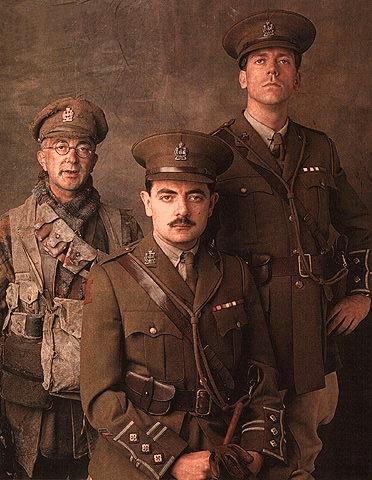
3. Blackadder (1983-1989) - Claiming the bronze medal is Rowan Atkinson and chums in this endlessly quotable tale of a man who's forever at the unfortunate end of a situation. Accompanied by the adorably moronic Baldrick (Tony Robinson), the four series span the wealth of human history as Blackadder is heir to the throne, lord to Elizabeth I, butler to George V and captain in the WWI trenches.

The shows first series is often considered apart from the subsequent efforts, since it was written by Rowan Atkinson and Richard Curtis and featured a weak and foolish Blackadder, a far cry from the cunning, money-obsessed man, wrought with bitterness and sarcasm, who appears in Blackadder II.

The reason for this is the addition of Tory-hater Ben Elton, who became co-writer with Curtis for the subsequent series, and the show enjoyed continual success and managed to end on a thoughtful note in the final tear-jerking episode 'Goodbyeee...' as Blackadder and the other infantry go over the top in slow motion to slowly fade into a poppy field, an end which was lauded by many families of WWI soldiers at the time.

Best Moment: Other than the fact that the show was used to teach me about 'rotten boroughs' in secondary school history, the show has a near-endless supply of classic moments, but one which encapsulates the spirit of the it is Blackadder's futile attempt to teach Baldrick to count. (Watch it here)

2. Coupling (2000-2004) - It would be unfair to call this 'the British version of Friends', as it so oft has been, because there is so much more to this relationship-centred sitcom. (In fact the show was tried in America as a word-for-word re-shoot, but it was cancelled after four episodes).

Focused around six friends, the show follows the development of the relationship of the two main characters, Steve and Susan, loosely based on the real-life relationship of series creator Steven Moffat (now Doctor Who head writer) and his wife Sue Vertue (who was a producer on the show).

The balancing act between the characters is integral to the shows success, accounting for the fall in quality in the final series when Richard Coyle's Jeff Murdoch left the series. The other characters, aside from Steve (Jack Davenport, of Pirates of the Carrabean fame) and Susan (Sarah Alexander - Green Wing), are Patrick (Ben Miles), a confident sexual preditor, Sally (Kate Isitt), a neurotic self-depricating spinster, and Jane (Gina Bellman), an air-headed and very sexual character who's very aware of her own attractiveness.

The show offers not only comedy, but lessons for couples and friends alike, with such wisdom as 'The Giggle Loop', 'The Nudity Buffer' and 'The Sock Gap'. The characters all offer experiences which the audience can relate to their own lives, along with a host of comedy references and discussions to ensure it isn't too grounded in reality.

Best Moment: Steve's mammoth speech on the path of man and nudity is truely a testament to the brilliance of Steven Moffat's writing and is not only hilarious, but absolutely true. (Watch it here)


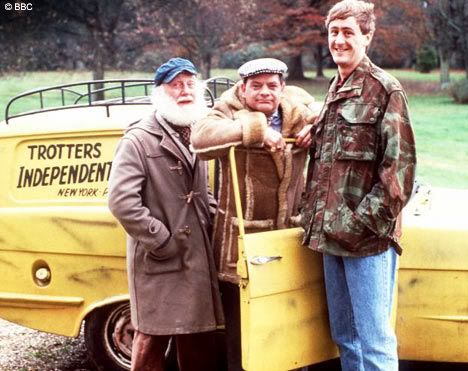
1. Only Fools and Horses (1981-1991) - The gold medal goes to the comedy delights of John Sullivan's outstanding portrayal of suburban life in London, helmed by the Trotter Brothers Derrick (Del Boy), played by David Jason, and Rodney (Nicholas Lyndhurst).

The show spanned seven series and numerous Christmas specials, crescendoing with the 1996 special trilogy: Heroes and Villains, Modern Men and Time In Our Hands. Ignoring the lacklustre 2000's specials, the trilogy has often been said by Sullivan to be the end he intended for the storyline, with Del Boy, Rodney and Uncle Albert (Buster Merryfield) walking off into the sunset.

Language in the show was not only very 80s but also very slang-filled, allowing younger generations to be properly schooled in what is, surely, a lost art form.

The relationship between the two brothers is central to the story, with Del as a cheeky wheeler-deeler, doing hard graft and toeing the line of the law to make ends meet, while Rodney embraces future technology and environmentalism, taking a computer science course in later series, but is marred by a past of drug use, meaning he's forced to work for Del instead of going out and making a living for himself, a fact which he constantly laments.

The supporting cast makes almost every episode classic, from Boycie's (John Challis) caniving car deals to Trigger's (Roger Lloyd Pack) simple-minded comments and his profound refusal to call Rodney by his name, instead calling him Dave, despite at one point having it explained to him by Rodney.

The show has created some of the most classic comedy moments of all time, and even now has relevence to modern society (particularly with the recession et al) and the rich characters and sharp writing is what makes the show deserve it's title as the Greatest British Comedy Programme of all time.

Best Moment: Naturally countless, but the Trotter brothers' trip to a fancy dress party in 1996 special 'Heroes and Villains' is a testament to the shows greatness. (Watch it here)

Well there you have it, hopefully you enjoyed this voyage through British comedy, of course, it is only my opinion, and if you disagree then by all means say, though I do feel I should mention some higly commended:

Monty Python's Flying Circus - More than a comedy program, the films are what seperate this from the top 10, since with them they became more than a comedy programme. A truely terrific pillar of British achievement.

Dad's Army
- Though considered to be amoung the comedy greats, this show missed out by it's age, since I only judged shows which I'd seen all the way through, and sadly due to the fact that Dad's Army was originally shown back in 1968, it would be unfair for me to judge it on the few episodes I've seen, though it is, undoubtedly, excellent nonetheless.
Saturday, 28 February 2009

The Top 10 British comedy programmes of all time - Part 1

Comedy is always a tricky subject, since one man's (or woman's) comic genius is another man's (or woman's...damn political correctness) load of old rubbish.

With the wealth of material available, it's almost impossible to narrow it down to just 10, but This is Entertainment is proud to present to you, the excitable masses, the first installment of the Top 10 British comedy programmes of all time:

10. Red Dwarf (1988-1999) - Lister and co took comedy to space in a way which hadn't ever been done before (at least not so successfully) and in their eight series managed to cover a wide range of (vaguely) scientific subjects, and keep the overall narrative of the series' working so that the show never became stale, despite welcome and unwelcome changes throughout the years.

Despite Craig Charles' Lister being the centre of the show, the only surviving human after a radiation leak kills everyone else aboard the mining ship Red Dwarf, it remains an ensemble piece, with the early series playing on the juxtaposition of Rimmer (Chris Barrie) and Lister's personalities, helped along by the classic interjections of the ship's computer Holly (Norman Lovett), while the latter series were more dramatic, and were a generally effective, if unusual change of pace.

Best Moment: The episode "Backwards" when the crew find themselves on a planet where time goes in reverse, leading to a number of quirkily hilarous situations, particularly Lister getting into a fight for un-eating someones pie. (Watch it here)


9. Never Mind The Buzzcocks (1996-present) - You might say it's splitting hairs to include a show which isn't an out and out comedy, but 'Buzzcocks is one of the most consistantly funny comedy quiz shows on the box.

The music-based panel game was prestented first by Mark Lamar (1996-2002) and then Simon Amstell (2002-present), two teams consisting of a captain and two guests answer music based questions, often about the guests own songs or careers.

The team captains are Phil Juppitus and Bill Bailey (previously Sean Hughes) and along with Amstell, proceed to mock the panelists around a vague gameshow format.

Best Moment: In one episode, Simon Amstell made a joke about Ordinary Boys vocalist Samuel Preston's then-wife Chantelle Houghton by reading an extract from her autobiography, leading to Preston saying "That is out of order!" and walking off the show, only to be replaced by a member of the audience who looked a it like Preston, picked out by Bill Bailey, for the rest of the episode. (Watch it here)


8. Black Books (2000-2004) - Dylan Moran, Bill Bailey and Tamsin Greig starred in a sitcom centered around a bookshop of the same name, run by cynical alcaholic Bernard Black (Moran) and his Egor-ish assistant Manny (Bailey).

The show ran for three seasons on Channel 4, and in that time attracted a cult following, and featured guest stars including Simon Pegg, Nick Frost, David Walliams, Peter Serafinowicz and Julian Rhind-Tutt.

What makes the show so good, is that it's very British, with all the British cynicism, complaining and resistance to change epitomised by Bernard, while Manny being more optimistic, and constantly coming up with ideas of how to attract more customers to the shop. Fran Katzenjammer (Greig) is the mother figure, as well as giving the pair relationship advice, but the funniest aspect of her character is her general quirkiness, particularly around men she likes.

Best Moment: The perfect embodiment of the show is when Fran and Manny are both trying to convince Bernard to do things with them in the series 2 episode "Fever", to which Bernard replies "Oh, I dunno, walls, thermometers, it's an impossible decision. I'll just have to hope that when I flip the coin it somehow explodes and kills me."


7. Have I Got News For You (1990-present) - The show that gave the news a funny bone hit screens back in the 90s accompanied by the satirical trio of Angus Deayton, Paul Merton and Ian Hislop. Now, 36 series and a scandal or two later, the show survives to bring current affairs to a new generation.

Since Deayton's departure in 2002 the show has been graced with a range of guest presenters (of varying success), while it searches for someone to fill his shoes.

The ever-updated title screen is a telling satirical portrait of modern life, and in itself manages to raise a smile or two.

Best Moment: Aside from the episode after Deayton's affair with a prostitute is exposed, which is not only hilarious but brutal, an episode from the late 90s sees Piers Morgan on the panel suggest "jam" is the answer to an 'odd-one-out' question. When asked why he replied that Eddie Izzard had said it the previous week and everyone thought it was very funny, to which Hislop explained: "Yeah, but people like him!" (Watch it here)

6. Fawlty Towers (1975-1979) - A post-Python John Cleese stars as one of the most iconic comedy characters of all time: Basil Fawlty. Along with Andrew Sachs (who is, in fact, not from Barcelona, but Germany) as half-wit Spaniard Manuel, the quiet little Torquay hotel gives rise to an impressive catalogue of golden moments, despite it's criminally short life-span, with only 12 episodes ever broadcast.

The other characters give Basil his stage, particularly Prunella Scales' shrieking Cybil Fawlty and Connie Booth's Polly. Interestingly it was Booth not Scales who was Cleese's real wife at the time, and Booth also co-wrote the programme with him.

When a show integrates with British society so easily it's hard to deny it a position as one of the greats, how many times have you heard someone mutter "Don't mention the war!"

Best Moment: The oft-quoted Germans episode passes the test of time (particularly since so much is crammed into one story), but the greatest single exchange is the Gourmet Night episodes' finale, which sees Fawlty, finally believing to have sorted out his series of unfortunate mishaps with food, unveils not duck with orange sauce, but a trifle. (Watch it here)

Five down, five to go, but who will make the top spot? Stay tuned for the hilarious conclusion...

Wednesday, 18 February 2009

Modern Warfare v World at War: The battle of Call of Duty

Like many others I enjoy shoot-em-ups, I'm not particularly good, but they are always fun to play.

Call of Duty 4: Modern Warfare was a triumph, sweeping awards and top reviews in 2007. Developed by Inifinity Ward, owned by Activision Blizzard and including a number of people who worked on Medal of Honour: Allied Assault, the game brought the long-standing Call of Duty series up-to-date by focusing on subjects such as terrorism and nuclear threats.

When it's follow-up was announced to be taking proceedings back to WWII, a lot of people were unhappy, many wanted to see Modern Warfare 2 (which they will later this year), but instead Activision in their wisdom decided to hand over development of Call of Duty 5 (which became World at War) to fellow company Treyarch, who made Call of Duty 3, a title which wasn't well receieved by fans of the series, as well as several other mediocre titles such as the Quantum of Solace game.

When you pick up the game, you can immediately see the influence Infinity's title had on WAW's development, at times you feel like you could be playing the same game, though obviously, that's the point. Others have gone into more detail than me, but I did notice that sadly the game falls short of the mark in a few key areas.

The AI in the single player campaign forces you to take point at pretty much every opportunity in order to force them to do anything, and often only covers you after you've cleared out an enemy bunker, their weapons trained on a blank section of wall. Another issue is movement, though generally little different from COD4, you find yourself sticking on walls and debris on the floor at the most inoppertune moments and shout in frustration as enemy soldiers cut you down.

In multiplayer things fare somewhat better, the inclusion of vehicles is a bonus and an ingenious, if irritating, turn to swap the helicopter of COD4 for a pack of dogs causes endless entertainment, if you get that big a streak. The levels though are quite blocky, and too often you find players exploiting cover to camp, which isn't such good fun.

Treyarch have clearly done their best with the title, but you can't help but wonder how different the game might of been if the order they were released in was reversed. If you had to make a straight choice between which to buy, unless you have a wild passion for WWII, it's Modern Warfare every time.

Friday, 13 February 2009

Live: Alkaline Trio at Manchester Academy 11/02/09

Chicago punk/rockers cooked up a fire-storm at Manchester's Academy 1 on Wednesday, delighting old and new fans with a show to remember.

Support came from Broadway calls and The Audition, and while the former were unremarkable, the latter showed enough energy and enthusiasm to get even the most melancholy in the room clapping along to their own brand of infectious pop/punk with tunes like Warm Me Up and Hell To Sell.

The main event arrived to a dark stage, the typically gothic backdrop reads “Agony and Irony”; the title of their new album, as the lights blare to reveal guitar/vocal master Matt Skiba in large square sunglasses, like a rocked-up version of Johnny Depps Willy Wonka, to break into a punchy Calling All Skeletons.

Next up was fan favourite Private Eye, the first of several tracks from the bands celebrated “From Here To Infirmary” album. The song choices were very much for fans: a few catchy new tracks (particularly an impressive rendition of I Found Away) interspersed with classics going well back through the bands repertoire.

Despite only a little direct encouragement, only song-titles and the occasional hello coupled with Dan Andriano giving a timid “thanks”, the crowd revelled in the company of one of the best 90s punk/rock outfit still around.

The only tracks noticeable by their absence were the big songs from 2006's Crimson, but this is unsurprising considering fans reaction at the time. It was clear that this gig was a celebration of everything that makes the band worthy of their Alkaline Trio skull-tattooed fans devotion.

4/5

Wednesday, 11 February 2009

What are subtitles actually for?


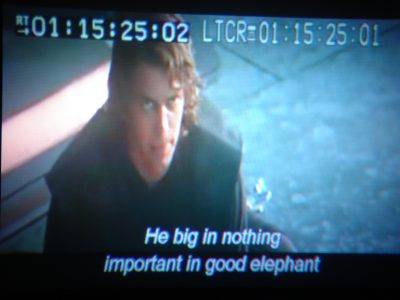
Some think subtitles are merely a device to allow the hard of hearing to understand and enjoy TV programmes and films more easily, and that is, of course, how they began their life, but what about everyone else? Are they just irrelevant choices on a DVD title screen?

If you've got this far then hopefully you have a feeling that there might be a little more to it than that.

A reliable (though basically designed) internet page tells us that subtitles have been considered since the inclusion of voices in film in 1929. In those days, a lot of films came from abroad in foreign languages, so the only way British audiences could understand them was to have the films 'dubbed' into English, a practice which still goes on to this day.

Dubbing is expensive though, and soon film-makers had the cunning plan just to show the words on screen as they did with the title and credits and the beginning and end of the films, but tucked away at the bottom of the screen so you could still see what was going on, hence subtitles.

Fast-forward to today and you see subtitles telling you the latest news in railway stations, when audio would need to be deafeningly loud to be heard over busy commuters, as well as in nightclubs to let you enjoy an episode of Family Guy or whatever it might be while you take a break from all that hard boogie-ing.

In foreign films still, subtitles are used, and in Japanese anime films and series there are not always English-dubbed versions of series available, making reading 'subs' the only way to understand the action.

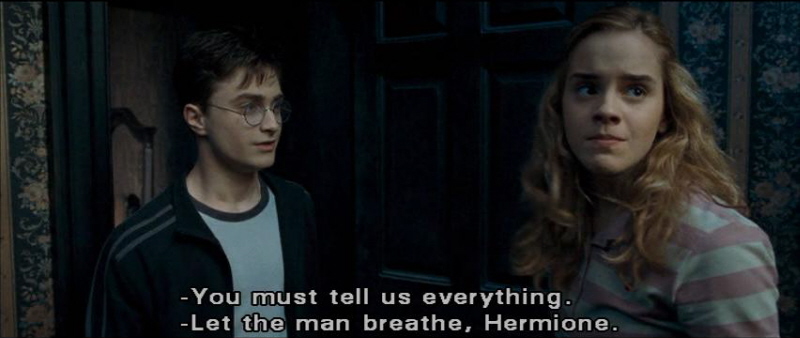
Subtitles can also be used in education, since many children may be daunted at the prospect at watching Harry Potter's adventures in French, but once the subtitles are put on they can watch a good(ish) film and learn the language at the same time: the definition of enjoyable learning.

There are still practical reasons for the inclusion of subtitles, and it baffles the mind to think that in an age where we're (supposed to be) more accepting and accommodating to people than ever before, some DVD releases still don't have subtitles when others boast alternate audio soundtracks and dozens of world languages to read through.

Monday, 2 February 2009

Music to your ears: A blagger's guide to Last.fm


Last.fm?! I hear you shriek in dismay, what's that?! Should I 'have' it? What aren't you telling me?!?!?

These are just a few of the panicked questions I hope to answer.

I'm not a Last.fm legend by any means, in fact currently my apparent number of listened to tracks stands at a measly four thousand, but I think it's an excellent Web 2.0 resource, and anyone who calls themselves a music lover should check it out.

Last.fm, first and foremost, is a website (http://www.last.fm) which keeps track of what music YOU listen to, as well as suggesting new music you might enjoy. All you have to do is sign up and let your media player know what your Last.fm details are (personally I'd recommend Songbird, but more on that later) and away you go!

The site itself began when two of its founders, Felix Miller and Martin Stiksel, who were running an online record label to promote new and unknown bands, joined up with Richard Jones, who was tracking his and his friends' listening habits using a program called Audioscrobbler, to bring their projects together in 2005 to create Last.fm as we know it today.

The site itself says it's:
"about making music culture more democratic: everyone listening to music how they want to, when they want to. Without a middle man making your decisions for you."
Bizarrely, it actually pulls this off, creating a playlist for you of recommended music even if you chose one band. But hang on, how can we know that the site doesn't just push bands which pay it more money? The truth is we can't ever know for sure, but it's easy to believe that it really isn't all about the money with this site, simply from the wide range of new music available.

There are some drawbacks however, you need to have an audio player which talks nicely to the site in order for your music to show (luckily most major ones are already compatible) and if you are away from your computer and just fancy some music you can go on there, but you can't listen through all the tunes from a certain band, instead the site offers similar bands after the first track, which can become irritating.

Providing you have the right media player though, actually using the site is a piece of cake, since everything is automated, so you can go on and find out just how worryingly addicted to Less Than Jake you are.

Songbird, the free open source player from the Firefox crew, Mozilla, has just released its 1.0.0 version, so it's early days, but it is one of the most customizable music players in existence, offering countless add-ons for everything from Album art to quizzes and, naturally, full Last.fm scrobbling (that's shoving the songs you're listening to on the site by the by).

So, there you have it. Last.fm is a tool, but a fun one, and when coupled with one of the most versatile media players ever conceived there really has never been a better time to be a music fan.

----------------
Now playing: Manic Street Preachers - Send Away The Tigers